

Are Humans The Only Animals That Reason
If humans and other animals were living in the same surround, why didn't other animals evolve like usa? – Sami, aged thirteen, London, UK
This is a brilliant question. Humans have evolved differently to other animals. We have much bigger brains relative to trunk size and in absolute size than other mammals, and have a level of intelligence that other animals don't.
In that location are many advantages to intelligence, such equally the ability to program and cooperate, introduce new techniques and share information near what works.
The reason that living things evolve sure features, like stripes on a tiger, bright colours on a butterfly or a big encephalon in humans, is that these features have benefits that help them survive. The living things with these beneficial features then pass them on to their offspring.

Curious Kids is a series by The Conversation that gives children the adventure to have their questions about the world answered by experts. If you accept a question you'd like an expert to answer, send it to curiouskids@theconversation.com and brand certain you include the asker's first name, historic period and town or city. We won't be able to answer every question, but we'll practise our very all-time.
There are a number of hypotheses – ideas – about the origins of human intelligence. The one I do my research piece of work on is chosen biocultural reproduction.
Having large brains allows humans to keep more than babies alive than other animals. According to the biocultural reproduction hypothesis, how intelligence helps us to keep babies live comes downwards to how we intendance for each other – and especially how we look after children.
Helping each other
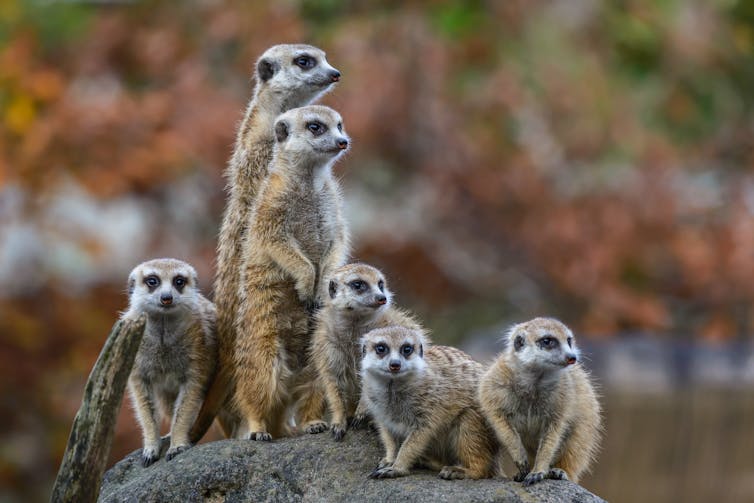
Many animals live in modest or large social groups, and some social species of birds and mammals, such as meerkats, help each other to feed and protect their babies. This is called cooperative breeding. The helper animals don't have any babies of their ain. They give up their ain reproduction to assistance a dominant family fellow member, such as their mother or older sister.
People are different. Anyone who wants to and is able to have a babe can do so. Not all human parents can or will intendance for their ain babies, but other people oft have intendance of the children of others.
Parents and other carers may invest in young people for many years, sometimes for all their life. I am a parent and I keep to help my grown-upwardly offspring, and their offspring – my grandchildren. This helping is what scientists call biocultural reproduction.
The carers may exist genetically related to the child they wait afterward, but they also may non be. The rules for how people care for each other are not set by genes, but by the names we give each other. These are not names similar Sami or Barry, but things like "daughter", "auntie", "grandfather", "cousin" or "friend".

Using names like these requires symbolic language. This ways that the names we call each other represent ideas about how we should care for each other. Merely humans and some of our ancestors evolved this kind of symbolic communication.
Nosotros might call our friends "sister", "brother" or "cousin". In many man societies, younger people refer to older people they are not genetically related to as "auntie" or "uncle". Some religious leaders are chosen "begetter", "female parent" or "sis". These names are used every bit a sign of respect and also give united states information about our relationships with these people.
Big brains needed
This naming affair that people practice is complicated. Big-brained intelligence is needed to call up all the names and the lifelong history of interactions that nosotros have with family and friends.
Our closest biological cousins, such as chimpanzees, have brains only one-third the size of ours. They do not use symbolic language or call each other by names. Female parent chimpanzees care for their own infants and no other chimps help, not fifty-fifty fathers or grandparents. Just i-3rd of chimpanzee babies survive to adulthood.
In contrast, the wide range of people who provide care – including feeding, care when sick, didactics, money and beloved – ways that man babies are more likely to survive and thrive. Large-brained intelligence helps u.s. treat each other and helps to explain, in part, why the human being population is approaching eight billion people.
Source: https://theconversation.com/curious-kids-why-didnt-other-creatures-evolve-the-intelligence-humans-have-172673
Posted by: spraguethicamewyn.blogspot.com
0 Response to "Are Humans The Only Animals That Reason"
Post a Comment